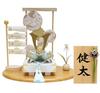
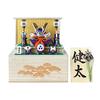
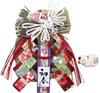
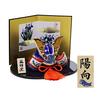
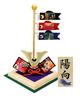
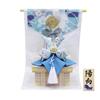
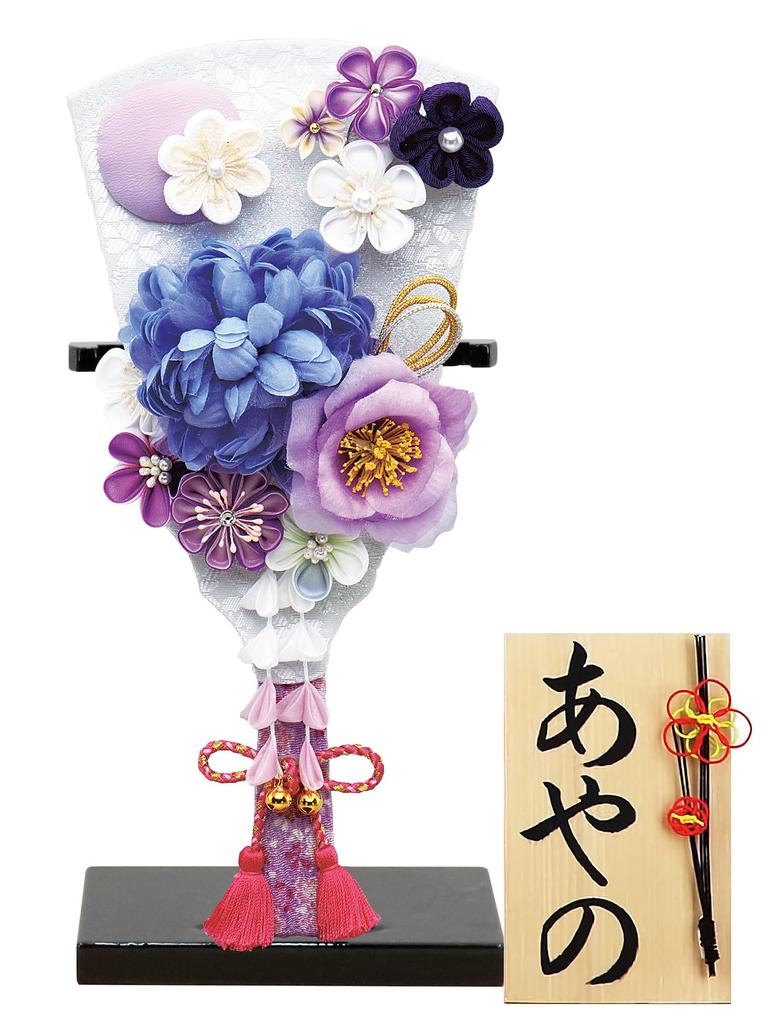
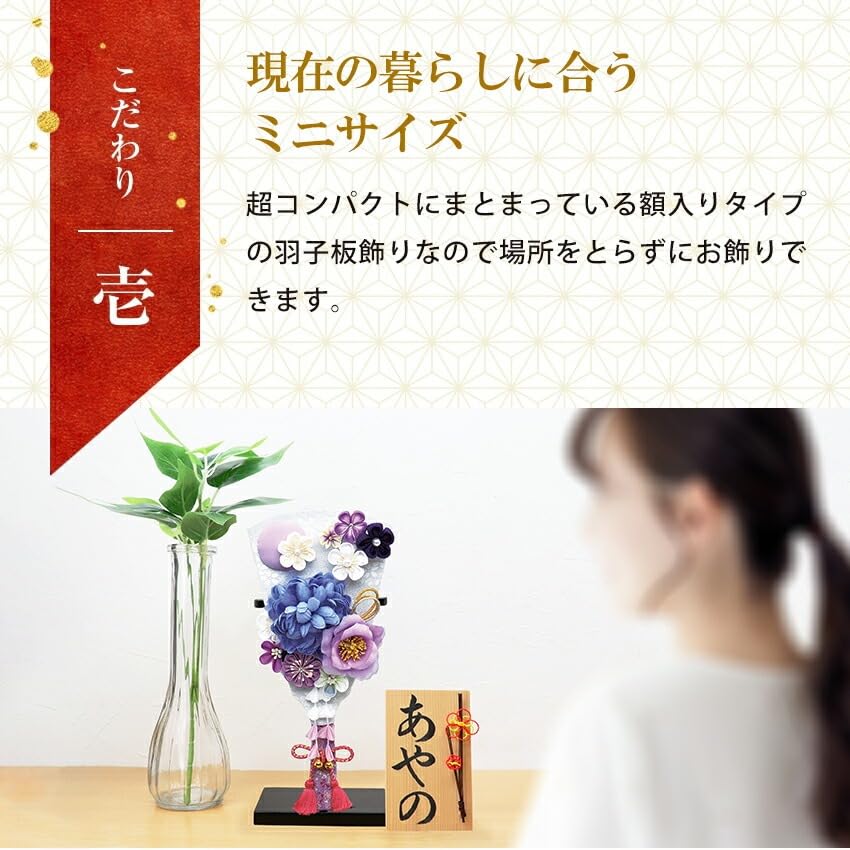
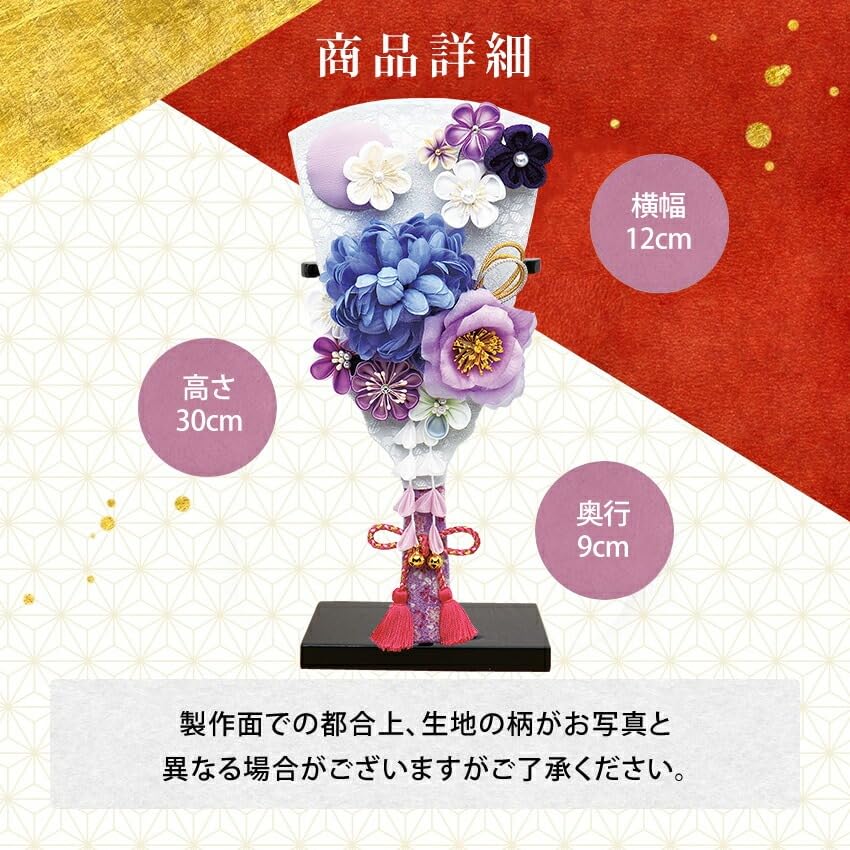
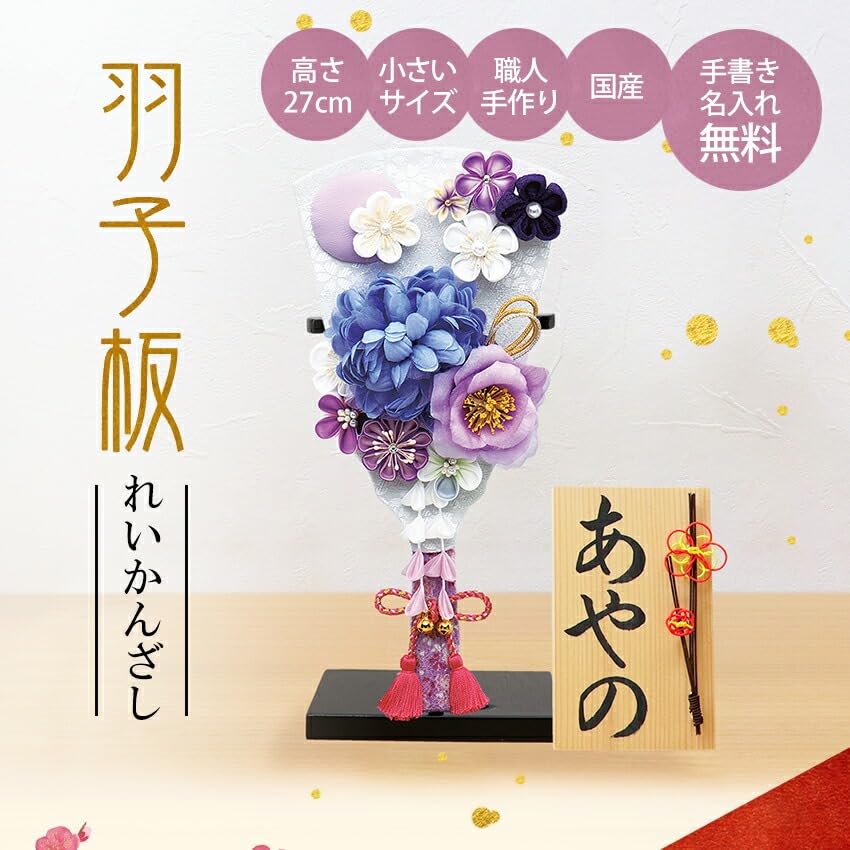
Battledore height: Approximately 27cm Decoration size: Width 12cm x Depth 9cm x Height 30cm
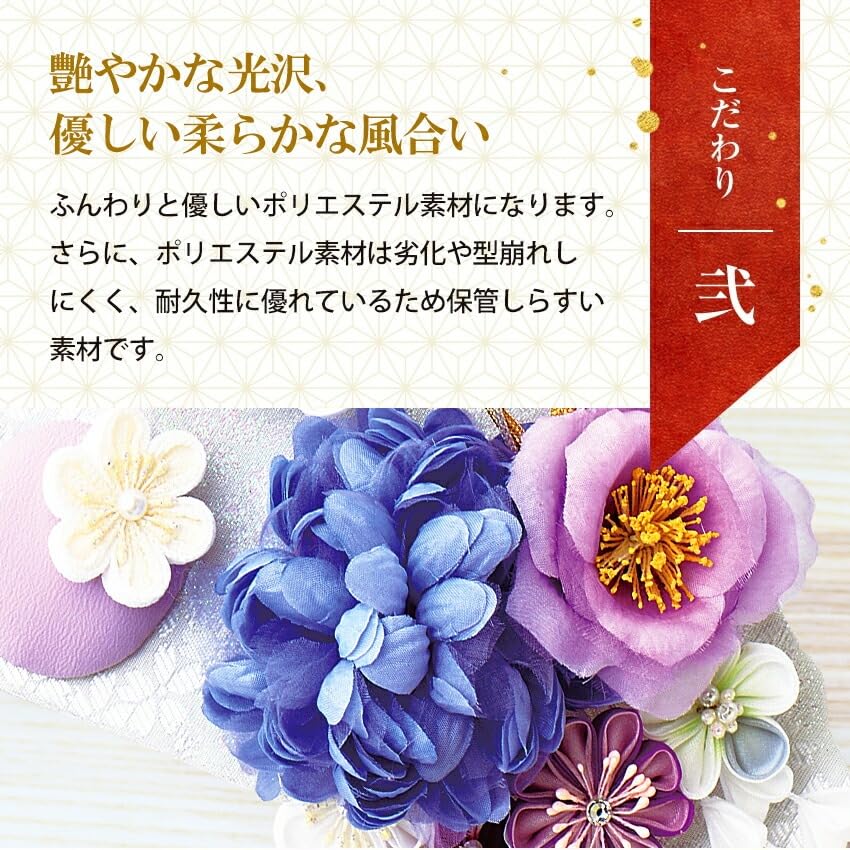
Quality: Polyester (Japan) - Hagoita (decorative battledore) - Boxed
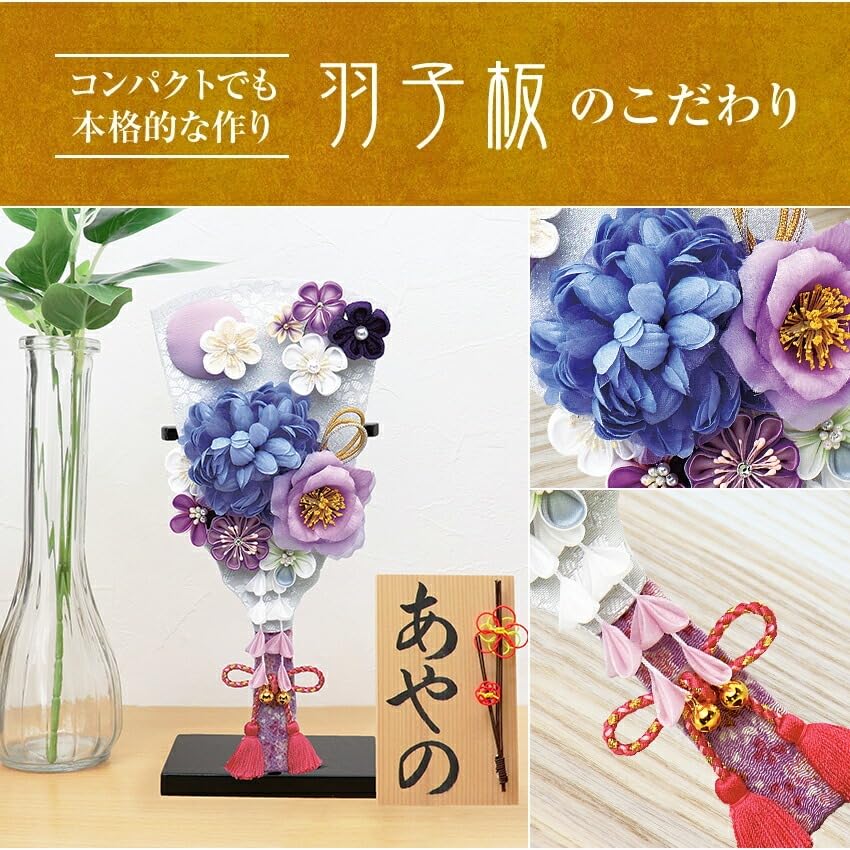
Each item is handmade. Please note that due to the nature of the production process, the fabric pattern may differ from the photo.
Our shop is a long-established engagement gift shop founded in 1931. We have been preserving Japanese traditions and culture for nearly a century. All of the personalized wooden tags that we send out as a service are handwritten. Please refer to the notes at the bottom of the page, and the personalized wooden tags will be sent separately from the product.
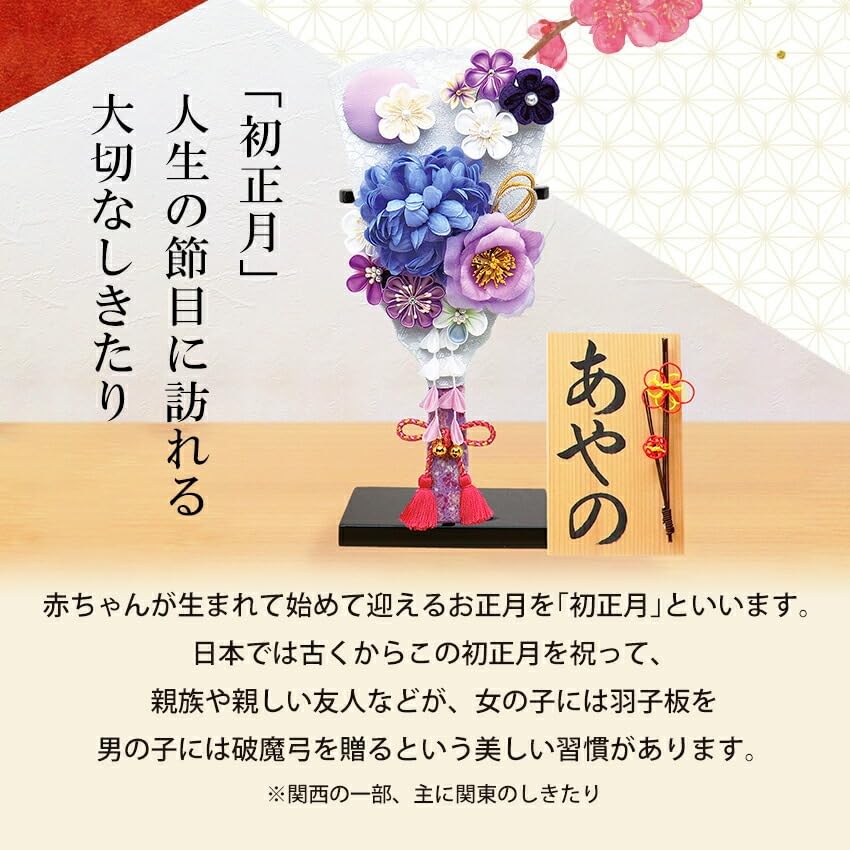
[What is Hatsushōgatsu?] Hatsushōgatsu refers to the first New Year a baby experiences after birth. In Japan, it has been a long-standing tradition to celebrate this first New Year with the baby's grandparents, uncles, aunts, matchmakers, and close friends giving gifts: a battledore for girls and a ceremonial bow for boys. [Meaning of Battledore] Battledore and shuttlecock have been a girls' game since the Edo period. The battledore also serves as a charm to protect baby girls from illness. The hard, black ball used in battledore is the seed of a large tree called "mukuroji," which is written as "無患子" in kanji. This symbolizes "the child will not suffer from illness." [When to display] Battledores and ceremonial bows should be displayed from mid-December onwards. It is also a good idea to invite those who gave the gifts to your home for a celebration during the New Year. It is best to put them away around January 15th. This is because it is around this time that the Sagicho (Dondo-yaki) ceremony, in which New Year's decorations are burned, takes place. In the Edo period, there were brightly colored Sagicho battledores depicting scenes from the Sagicho ceremony at the Imperial Court. This can be said to illustrate the close relationship between this New Year's event and battledores.
Please see the explanation at the bottom of the page for details on the wooden tag bonus. A decorative battledore to adorn a girl's first New Year. It is made of polyester material with a glossy sheen and soft texture. "Yuinoya Choseido" is a specialty store for engagement gifts and traditional crafts, established in 1931. We also have stores in Daimaru, Matsuzakaya, and Kintetsu Department Stores. [What is the first New Year?] The first New Year that a baby celebrates after birth is called the "first New Year." In Japan, it has been a beautiful custom since ancient times to celebrate this first New Year, with the baby's grandparents, uncles and aunts, matchmakers, and close friends giving a battledore to a girl and a hama-yumi (demon-repelling bow) to a boy. [Meaning of the battledore] Battledore and shuttlecock have been a game for girls since the Edo period. The battledore also has the meaning of a charm to protect the health and well-being of a baby girl. The hard, black ball used in the shuttlecock game "Hagoita" is the seed of a large tree called "mukuroji," which is written in kanji as "無患子" (mukanshi). This name carries the meaning of "children will not suffer from illness." [When to display] It is best to display the hagoita and hamayumi from mid-December onwards. It is also a good idea to invite those who gave them to your home for New Year's celebrations. It is best to put them away around January 15th.
This is because it is around this time that the Sagicho (also known as Dondoyaki) ceremony, in which New Year's decorations are burned, takes place. In the Edo period, there were brightly colored Sagicho battledores depicting scenes from the Sagicho ceremony at the Imperial Court. This can be said to illustrate the close relationship between this New Year's event and battledores.


 Zwrot w przypadku braku dostawy