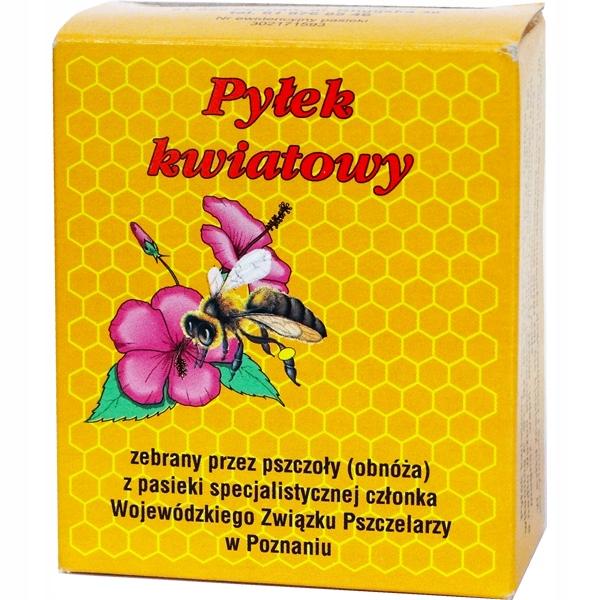
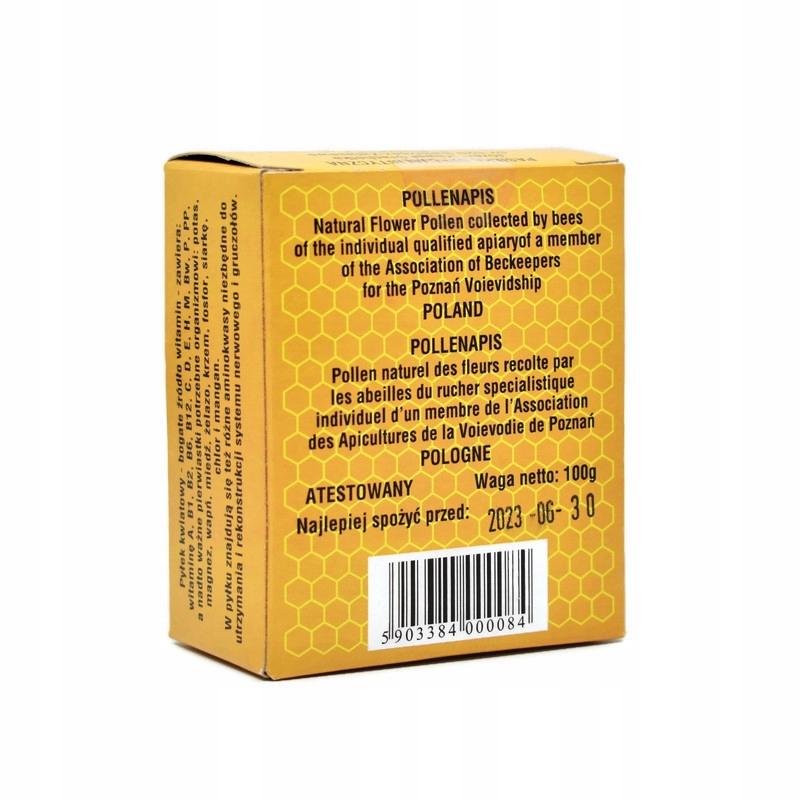
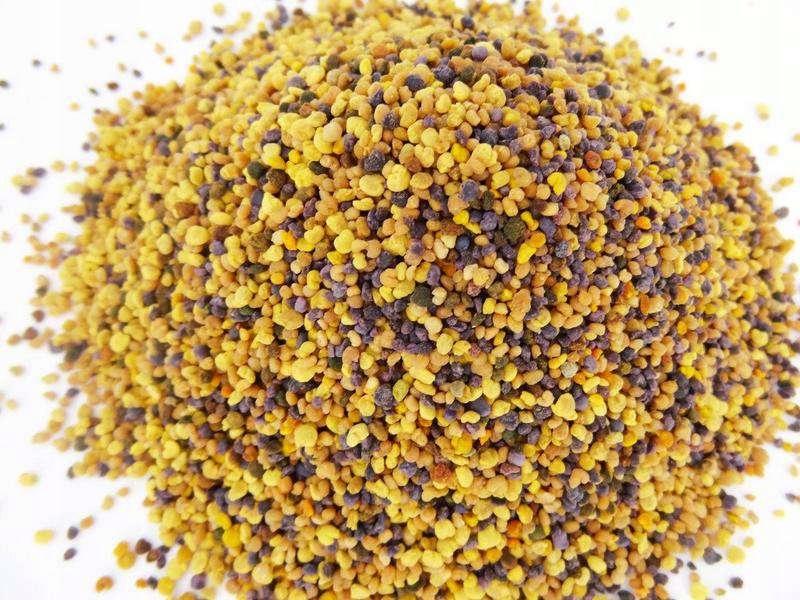
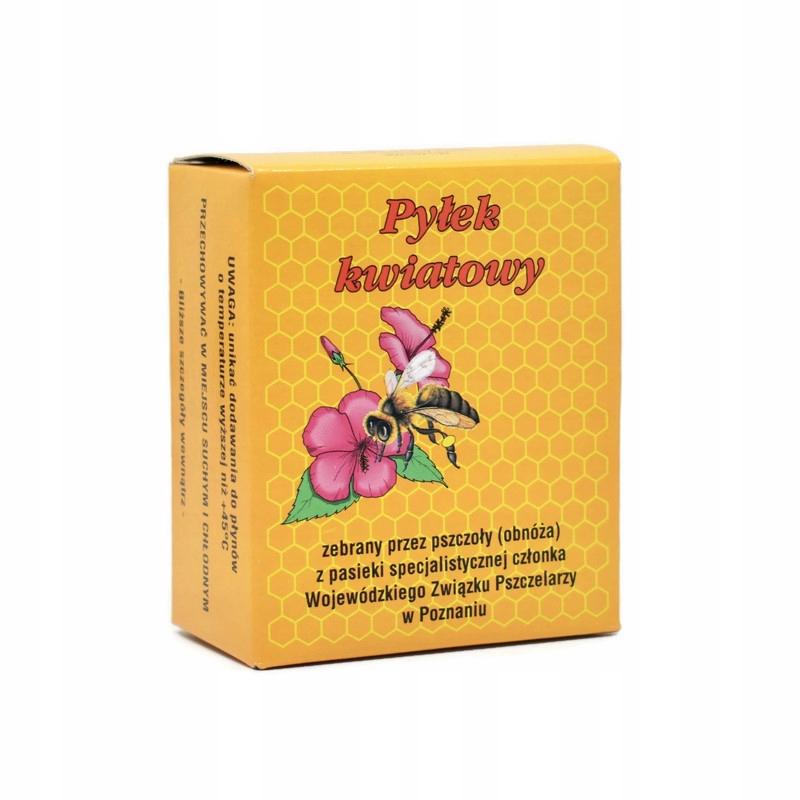
OFFER APPLIES TO FLOWER POLLEN 100G Flower pollen is a unique, all-natural product rich in a range of nutrients. It replenishes mineral and vitamin deficiencies, improves body functioning, and supports the treatment of various ailments. Flower pollen collected by bees (beeloads) from the specialized apiary of a member of the Provincial Beekeepers' Association in Poznań. Flower pollen – a rich source of vitamins – contains: vitamin A, B1, B2, B6, B12, C, D, E, H, M, Bw, P, PP, as well as important elements needed by the body: potassium, magnesium, calcium, copper, iron, silicon, phosphorus, sulfur, chlorine, and manganese. Pollen also contains various amino acids necessary for the maintenance and reconstruction of the nervous system and glands. Uses of flower pollen Upper respiratory tract diseases - taking pollen prophylactically prevents the occurrence of colds and flu, this applies especially to older people. In the event of illness, it shortens treatment time and alleviates the course of infection. Atherosclerosis - pollen has anti-inflammatory and antithrombotic effects. It is used for ischemic heart disease, hypertension, during recovery after myocardial infarction, and for cerebral and peripheral circulatory disorders. Gastrointestinal diseases - persistent constipation, chronic diarrhea, colitis, gastric and duodenal ulcers. Pollen has a beneficial and selective effect on the bacterial flora of the gastrointestinal tract by maintaining the proper development of saprophytic bacteria while eliminating pathogenic bacteria. Pollen enhances gastric secretion and normalizes intestinal peristalsis. Liver Diseases - pollen normalizes protein metabolism disturbed in liver diseases and restores its damaged microstructure. It has a protective effect on liver cells, both in inflammatory, toxic, post-traumatic processes, and in cases of drug-induced damage. It is indicated for both bacterial and viral hepatitis. Anemia - taking pollen causes an increase in red blood cells, 25-30% in children and 20% in adults. Eye diseases - inflammation of the retina, cornea, and conjunctiva - thanks to the presence of vitamin A and riboflavin in pollen, vision improves significantly and the disease progresses. Mental illnesses, senile disorders, states of psychophysical exhaustion, and neuroses - taking pollen improves thinking abilities and concentration, reduces nervous tension and psychomotor agitation, and leads to improved well-being. Inflammation and hyperplasia of the prostate - taking pollen causes regression of inflammatory and hyperplastic changes in the prostate gland and eliminates urinary retention. Men over 40 should be given pollen at a preventative dose of 15 grams daily to prevent changes in the prostate gland.


 Zwrot w przypadku braku dostawy