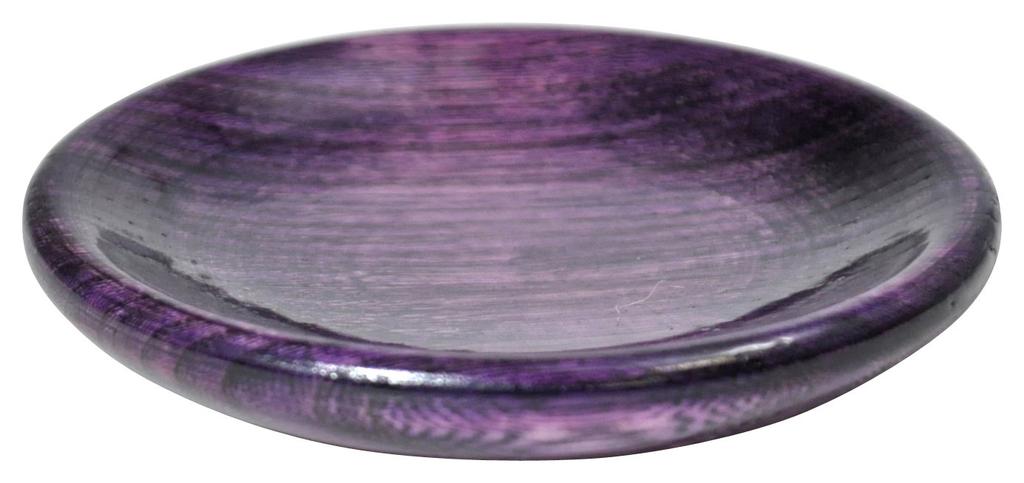
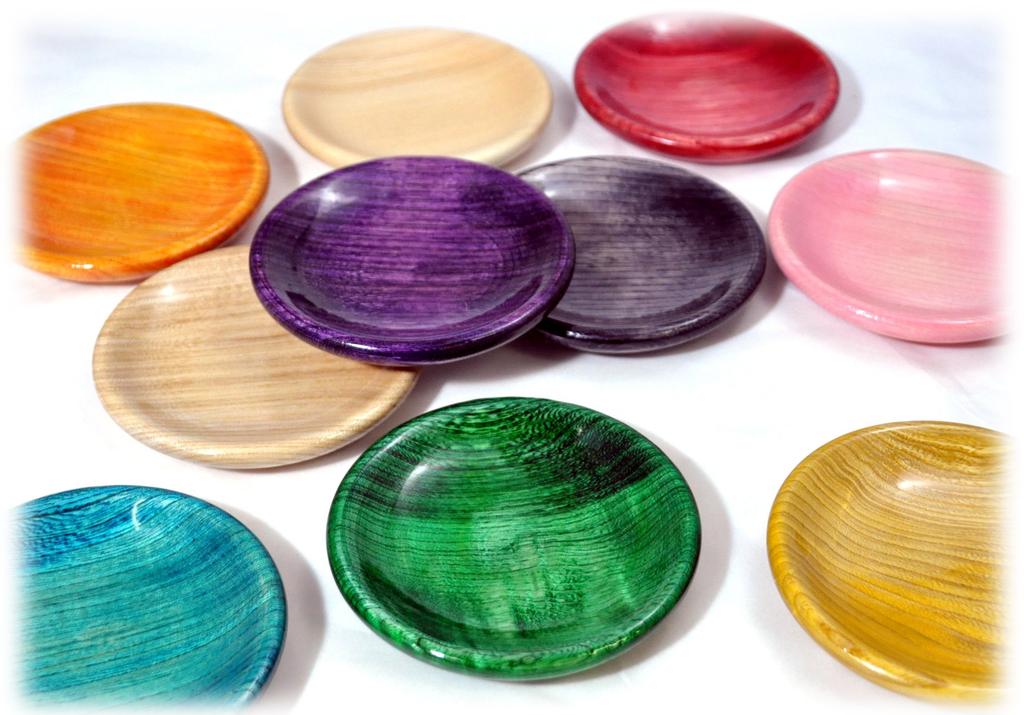
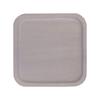
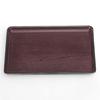
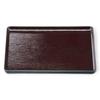
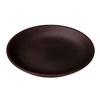
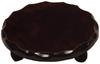
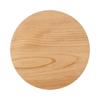
Domestic cork wood is turned on a lathe by woodturners in Yamanaka, a lacquerware-producing region, and then finished in colorful hues.
Please note that because natural materials are used, variations in the wood grain and traces of knots may be visible on the surface.
No unnecessary processing is done to preserve the natural texture. Enjoy the natural beauty of the wood.
[Characteristics of Yamanaka Wooden Lacquerware]
- Yamanaka woodturners specialize in lathe turning, a technique in which plain wood is rotated and hollowed out using a special blade called a plane. They specialize in the production of round objects such as bowls, individual plates, and tea trays. In particular, 80 to 90 percent of the wood used for tea ceremony utensils such as tea caddies is milled in the Yamanaka region nationwide.
Yamanaka's distinctive lacquerware is characterized by the use of a plane to create a unique design, known as sujihiki. There are approximately 50 variations, including itomesuji, rokurosuji, birisuji, hiramizuji, inahosuji, and tsukasuji.
Yamanaka lacquerware, blessed with an abundance of wood materials, uses zelkova, cherry, and oak to create a wide variety of vessels, large and small, and proceeds through the priming, lacquering, and maki-e processes depending on the intended use, resulting in beautifully lustrous lacquerware. Naturally, most of the production process is handmade, and the time required from drying the raw wood to completion can take up to a year or more.
Size: Approx. 10.8cm W x 10.8cm D x 1.8cm H
Material: Natural wood (urethane coating)
Country of Origin: Japan