![Sankosho (Three-pronged Vajra) - Buddhist Meditation Bell, Self-Defense, Sacred Item, Purification, Protection from Misfortune [Parallel Import]](https://img.joomcdn.net/8fa12465c66d2fd9aa2908ff52d5eb6dbdb23614_721_1024.jpeg)
![Sankosho (Three-pronged Vajra) - Buddhist Meditation Bell, Self-Defense, Sacred Item, Purification, Protection from Misfortune [Parallel Import]](https://img.joomcdn.net/403bc6021da45fee5775d4d29a39f67471ef129b_768_1024.jpeg)
![Sankosho (Three-pronged Vajra) - Buddhist Meditation Bell, Self-Defense, Sacred Item, Purification, Protection from Misfortune [Parallel Import]](https://img.joomcdn.net/99cbcece60c906ff862da555e83650d071b166e4_768_1024.jpeg)
![Sankosho (Three-pronged Vajra) - Buddhist Meditation Bell, Self-Defense, Sacred Item, Purification, Protection from Misfortune [Parallel Import]](https://img.joomcdn.net/9d3e67049cb7ff9ddc62fb7c1532244c964aab33_1024_1024.jpeg)
![Sankosho (Three-pronged Vajra) - Buddhist Meditation Bell, Self-Defense, Sacred Item, Purification, Protection from Misfortune [Parallel Import]](https://img.joomcdn.net/3ecb24beab47689b9ae74828db133a4af55f84e6_1023_1024.jpeg)
![Sankosho (Three-pronged Vajra) - Buddhist Meditation Bell, Self-Defense, Sacred Item, Purification, Protection from Misfortune [Parallel Import]](https://img.joomcdn.net/26ba54730bf0bf28788b231908086040a45ba044_767_1024.jpeg)
![Sankosho (Three-pronged Vajra) - Buddhist Meditation Bell, Self-Defense, Sacred Item, Purification, Protection from Misfortune [Parallel Import]](https://img.joomcdn.net/8a8ddfa607cf9ea065f96674bf8358ea8bb687be_768_1024.jpeg)
![Sankosho (Three-pronged Vajra) - Buddhist Meditation Bell, Self-Defense, Sacred Item, Purification, Protection from Misfortune [Parallel Import]](https://img.joomcdn.net/789cf6cc21e11fde319c6b879729eeebed190356_767_1024.jpeg)
![Sankosho (Three-pronged Vajra) - Buddhist Meditation Bell, Self-Defense, Sacred Item, Purification, Protection from Misfortune [Parallel Import]](https://img.joomcdn.net/32b7ce7c23db5ab89e325189b5b1a113798ee36b_735_1024.jpeg)
Sankosho (Three-pronged Vajra) - Buddhist Meditation Bell, Self-Defense, Sacred Item, Purification, Protection from Misfortune [Parallel Import]


Opis
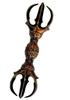
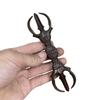
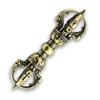
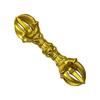
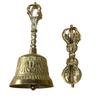
The trident is a sacred Buddhist implement that has been used since ancient times, and is a powerful item that has been used in Buddhist cultural spheres such as Tibet and India. Its power is used in Buddhist ceremonies and training to ward off evil spirits, make prayers, and purify the soul, and it is still popular today. In modern times, the trident is used as a spiritual item, purifying the mind and body, fulfilling wishes, and as a talisman to ward off bad luck. By understanding the meaning and usage of the trident, you can incorporate its great power into your daily life and use it as a talisman to attract good fortune. We will introduce in detail the historical background of the trident, how to use it in modern times, and how to make wishes. History of the Trident: A Buddhist symbol since ancient times, the trident is an important ritual implement in esoteric Buddhism (especially Tibetan Buddhism), and has been used extensively in Central Asia, India, and Tibet. The "trident" in its name refers to its three claw-like pointed blades, each of which represents a fundamental teaching of Buddhism. The central blade symbolizes wisdom, while the two side blades represent compassion and strength. It is said that by combining these three powers, one can attain a balanced mind and soul. The vajra is also a symbol of Buddhist deities, particularly guardian deities and warrior deities. It is believed to have the power to ward off evil spirits and bad luck, and has been used as a talisman by ascetics and in Buddhist rituals. Historically, the vajra was introduced to Japan with the introduction of esoteric Buddhism, and legend has it that Kukai (Kobo Daishi) used one as part of his training. It is said that Kukai used the vajra to connect with gods and Buddhas and draw out their spiritual powers. Modern-day uses of the vajra: Today, the vajra has become more than just a Buddhist implement; it is also highly sought after as a spiritual item. Below are some specific ways to use a vajra. 1. As its historical background suggests, the trident is believed to have the power to ward off evil. Displaying one in the entranceway or in a room is believed to ward off negative energy and evil spirits. Carrying one around with you also serves as an effective talisman to protect you from external evil forces. Keeping one in your pocket or bag will keep its power close at hand. 2. For Meditation and Relaxation: The trident is also used to aid in meditation and mental purification. Holding one in your hand or placing it in front of you during meditation can enhance concentration and bring about inner tranquility. Meditating while being mindful of the balance of wisdom, compassion, and power symbolized by the trident can help stabilize your mind and support your spiritual growth. 3. When using a vajra, which is used to make wishes, it is important to make a firm wish in your heart. It is said to have the power to guide you on the path to making your wish come true, and is particularly effective when praying for good fortune, success, or spiritual purification. When making a wish, it is a good idea to hold the vajra in your hand and pray while strongly imagining that you are eliminating negative emotions and obstacles within yourself. By doing so, the energy of the vajra will work to guide you toward achieving your goal. How to make a wish on a vajra There are ancient ritual methods for making a wish on a vajra. Below are the basic steps. Purifying the trident It is said that each trident has a designated owner, so please rest assured that we wrap it in linen cloth, which has strong purifying powers, to prevent any unwanted things from getting on it before it is handed over to its owner. First, before using the trident, it is important to purify the area and your own mind. Use incense or purification spray to purify the space and the trident itself. This will ward off evil spirits and prepare the trident to unleash its true power. Preparing your mind through meditation Next, take a deep breath to calm your mind and enter into meditation. Pick up the trident, close your eyes and concentrate. Clearly visualize your goal or wish in your mind, and never forget to hold on to a feeling of gratitude. Expressing your wish aloud Once your wish is clear, quietly speak it out loud, entrusting it to the trident. It is believed that by speaking it out loud, the energy will reside more strongly in the trident, allowing you to convey your intentions to the universe. Place the trident at your prayer spot After making your wish, display the trident in a sacred place or an important place in your life, or bring it with you to important occasions in your life. This will turn that place into a power spot, and you will receive support until your wish comes true. How to choose the recommended trident It is said that the energy of a trident varies depending on its shape and material, so it is important to choose one that suits your purpose and sensibilities. Metal trident: Said to have strong protective powers, and is suitable for warding off evil and misfortune. Wooden trident: Said to have gentle energy, and is recommended for those who wish to achieve peace of mind and relaxation. Decorated trident: Those with beautiful designs are said to be particularly effective in praying for good fortune and success. Either way, choosing a trident that resonates with you will further enhance its effectiveness. Bring the Power of the Trident into Your Daily Life! The trident is not just a Buddhist implement; it is a powerful companion that supports our mind and body and enriches our lives even today. Understanding its history and symbolic meaning, and learning how to use it properly, will help you fulfill your wishes and restore inner peace. Take this opportunity to incorporate a trident into your life and transform it into a richer, more refreshing experience. [Trident Vajra] (Sankosa = Vajra) A metal pestle-shaped Buddhist implement used in temples and a ritual implement of esoteric Buddhism. Early forms of esoteric Buddhism were practiced in Japan during the Nara period, before Kukai formally introduced esoteric Buddhism. This item is called a trident because of the number of prongs on the vajra (monk's vajra) from that period. A vajra is a pestle-shaped weapon with sharp blades on both ends of the handle, shaped like a thunderbolt. There are three shapes: the one with a single protrusion on both ends is called a "single-pronged vajra," the three-pronged one is called a "sankou vajra," and the five-pronged one is called a "gokou vajra." We will introduce the "sankou vajra," which is used to exorcise the difficulties that lie ahead. [History] The trident (vajra) is a ritual implement used since ancient times in Tibet and India for rituals, prayer, meditation, purification, and warding off evil. Originally possessed by the thunder god Indra, it was later believed in Buddhism that a deity wielding this weapon (Vajra) always accompanied and protected the Buddha like a shadow. The vajra as a ritual implement in esoteric Buddhism was adopted as a symbol of the enlightened wisdom that destroys worldly desires, as this weapon is strong and can destroy anything. The trident (vajra) that was introduced to Japan was the oldest form of vajra. It was received by Kobo Daishi (Kukai) from his teacher and is said to have been thrown when choosing a place to spread esoteric Buddhism, becoming the ritual implement that led Kobo Daishi (Kukai) to Mount Koya. [Anecdote] In Indian mythology, vajra refers to the thunderbolt sent down by Indra (Taishakuten). When Kobo Daishi, also known as Kukai, studied in Tang China as a Japanese envoy and was on the beach in Mingzhou before returning to Japan after receiving all the teachings of esoteric Buddhism, he threw a trident towards the east, praying, "Please show me a suitable place in Japan to spread esoteric Buddhism." The trident then flew off towards Japan on a purple cloud - this is the vajra. Its shape represents infinity, the same as the circulation of a torus. Its double spiral shape is activated by the user's frequency, and it is said to release upward spiral energy. In other words, the trident has been used because it is believed that by matching its frequency with the user's, it can ward off all difficulties around them and provide upward energy and guidance towards bliss. [How to use] It has the power to destroy demons and is used to ward off difficulties and worldly desires. Simply having it nearby is said to ward off misfortune and disaster. The trident is often depicted in old Japanese picture scrolls, and most of them are held in the hand to align with one's own vibrations. Carry it in your bag as a talisman, or place it in a place of concern, such as your home altar, entrance, living room, bedroom, or desk at work. Use it however you like, whether it's portable or permanent. "A weapon from Indian mythology. For home safety, road safety, fulfillment of wishes, physical and mental health, prayers for passing exams, prayers for easy childbirth, elimination of misfortune, elimination of disasters, warding off epidemics, prosperity in business, welcoming many customers, business success, prosperity for the company, improved performance, career advancement, bountiful harvests, prayers for a good harvest, prayers for a good catch, fulfillment of wishes, elimination of demons, fulfillment of wishes, academic success, employment success, prayers for easy childbirth, maternal and child health, and steady growth. This beautifully shaped charm is perfect for praying for fertility, achieving success in competitions, bringing good fortune to a new home, warding off evil spirits, and increasing financial luck. It's perfect for shattering evil spirits and banishing worldly desires. Material: Alloy. Approx. 15cm long, 4.3cm wide, 1.6cm thick, weighing approximately 300g.

![Sankosho, Trójzębna Wadżra, Wadżra, Buddyjski Dzwonek Medytacyjny, Samoobrona, Przedmiot Sakralny, Oczyszczenie, Ochrona przed Nieszczęściem, Orin [Przedmiot]](https://img.joomcdn.net/8fa12465c66d2fd9aa2908ff52d5eb6dbdb23614_70_100.jpeg)