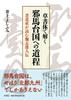
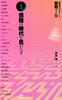
Omniscient and omnipotent passion moved the world."
From Leonardo da Vinci to Susan Sontag.
The explosive growth of information, the fragmentation of knowledge, and the onslaught of specialists—how have polymaths survived through numerous crises?
In this major work, leading cultural historian Peter Burke examines the biographies of approximately 500 people active in Western Europe from the 15th to the 21st centuries, documenting the social trends of knowledge.
Portraits of those obsessed with knowledge and their great adventures.
================================================
・Pythagoras, the oldest polymath and the creator of the word "philosophy"
・Leonardo da Vinci, a jack of all trades who always left his work unfinished
・The Marquise de Châtelet, who translated Newton's works at a lavish court
・Shen Tao, the polymath praised as the Chinese Leibniz
・Brunelleschi, who not only invented perspective but also knew everything
・Philosopher Decallo Queen Christina, whom Todd tutored
- Juana, a nun who remained single throughout her life and was knowledgeable in all things
- Perescu, who acquired her knowledge through over 10,000 correspondence
- Adam Smith, who wrote not only on economics but also on literature and the history of astronomy
- Susan Sontag, a polymath and critic
=================================================
It has been said that "polymaths have been neglected in history." "Some are forgotten, many are forced into categories we can recognize." As I will say many times, polymaths are remembered for only a few of their many accomplishments. It is time to correct this biased treatment. In fact, in defiance of specialist culture, numerous and growing studies of individual polymaths have been accumulated in recent years. I have gratefully utilized many of these works. These include intellectual giants like Leonardo and Leibniz, as well as half-forgotten figures like Dumont d'Urville and William Leeds. But it's not easy to find research on polymaths in general. While there is a growing body of research, it's still covered sparingly in specialist journals and on radio programs.
(From the introduction, "What is a Polymath?")



 Zwrot w przypadku braku dostawy



![Nowoczesna japońska Śmierć japońskiej książki Palenie książek [Wydanie przedrukowane, Tłumaczenie] (Książki GHQ)](https://img.joomcdn.net/a5e50d8ed4633cae808acde83bf806fe83a17ba3_68_100.jpeg)