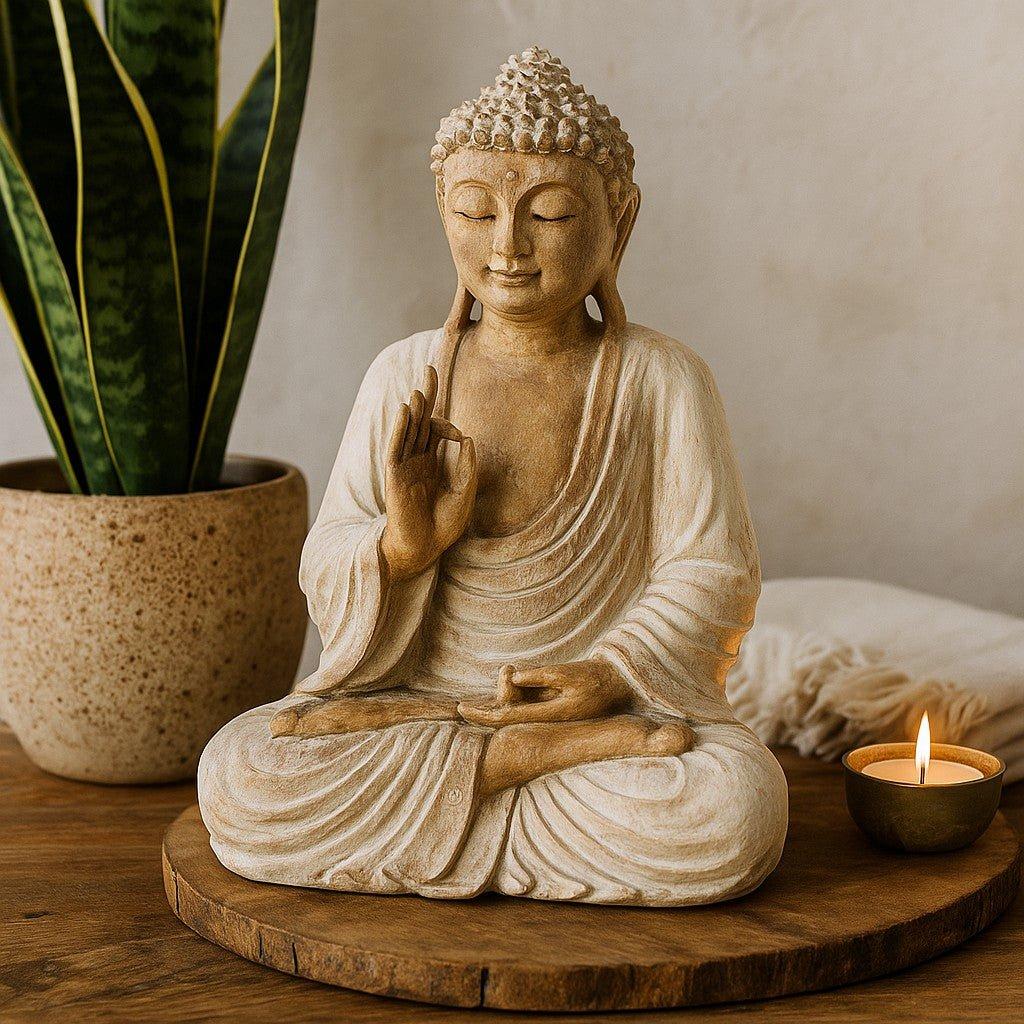
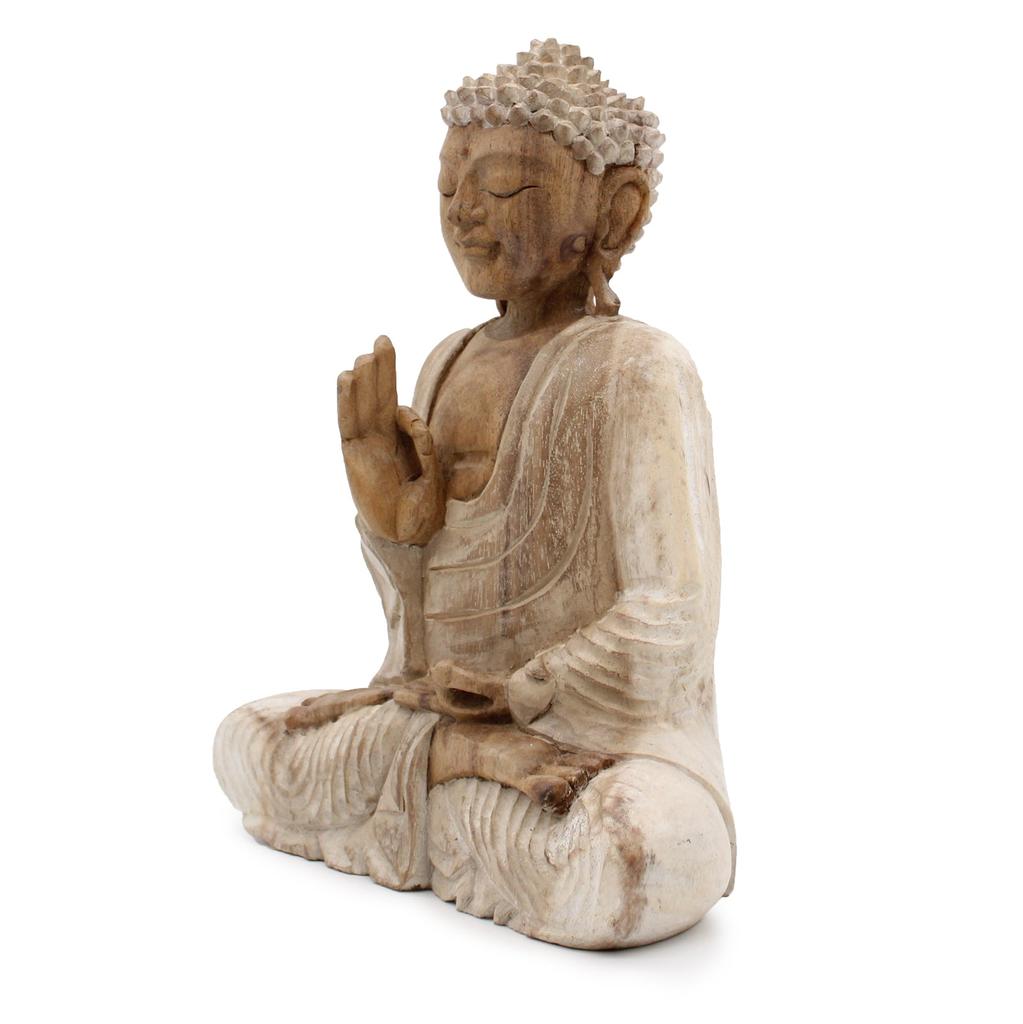
A hand-carved Suar wood Buddha statue brings a quiet, grounded presence to a shelf, meditation corner or hallway table. The whitewash finish softens the carved lines, giving the figure a timeworn, contemplative look without losing the detail of the teaching pose.
What the teaching pose brings to a room
The seated form feels steady and composed, suited to a place where you want the eye to rest.
The pale whitewash catches light gently, drawing attention to the face, robe folds and carved contours.
The teaching pose gives the piece a thoughtful character, more reflective than ornamental.
The natural wood beneath the finish keeps the statue warm and tactile, rather than cold or glossy.
Small variations, fine cracks or imperfections may appear, part of its hand-carved nature.
Carved Suar wood with Balinese craft
This Suar wood Buddha statue is carved by hand in Indonesia using traditional Balinese tools. The work is detailed and slow, with pieces of this kind taking weeks to complete. Each statue is slightly different, so the expression, surface and small marks will not be exactly the same from one to the next.
Placing and caring for the statue
Place it on a stable surface where its weight is well supported. It suits indoor spaces such as a calm living room corner, an entrance table, a yoga space or a quiet shelf.
Keep the wood away from prolonged damp and wipe it gently with a dry, soft cloth. Avoid soaking, harsh cleaners or leaving it in humid conditions, as natural wood can move or crack over time.
The teaching gesture in context
In Buddhist iconography, a seated Buddha in a teaching pose refers to the Buddha as a guide and teacher, sharing insight rather than displaying power or decoration alone. For some people it belongs in a devotional space; for others it is a respectful contemplative object in the home. The important thing is the tone it carries: still, attentive and dignified, with the pose inviting reflection rather than spectacle.
Siz…
region of manufacture: Indonesia




 Zwrot w przypadku braku dostawy